

Above: Students look on as Ryukyuan master chef Keiko-san shows off local Okinawan ingredients that will be used to prepare a traditional Ryukyuan meal together. (Photo by Jessica Guild)
It’s one thing to study history in the classroom. It’s an entirely different learning experience to travel to the places where history happened, immerse yourself in the culture and language of the place, and feel the emotional pull of past events that occurred in that very spot.
That’s what a group of 11 students—10 undergraduates and one graduate student—got to do over spring break this year when they traveled to the island of Okinawa, a Japanese prefecture off the southern coast of mainland Japan, midway between Japan and Taiwan.
The trip was part of the Okinawa Memories Initiative (OMI), a public history project launched in 2014 with a team of faculty, staff, alumni, graduate, and undergraduate students. Funding was provided by the Humanities Division, as well as the students’ hard work during UCSC’s 2023 Giving Day.
For the students who participated, it was a transformative experience unlike anything they’d ever encountered before.
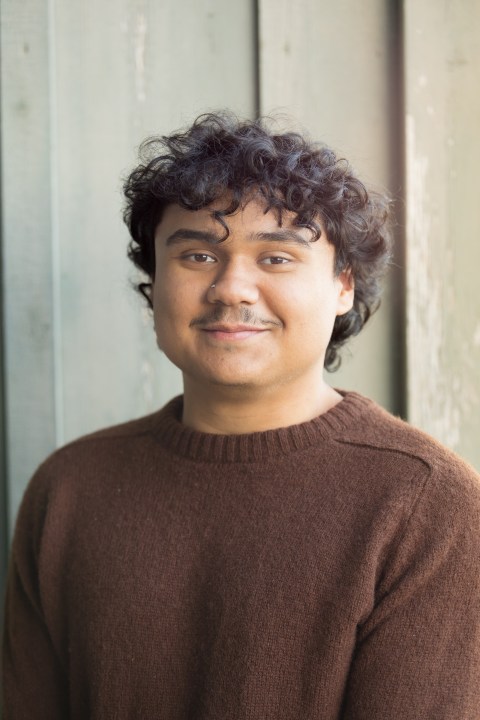
Walter Barnaby (Cowell ’25, history and politics)
“It felt like something completely different. It was really a realization of all the things we learned about, and to be put in that space is, I think, a really powerful experience,” said Walter Barnaby (Cowell ’25, history and politics).
During the trip, they gathered data for their research project; met local citizens, experts, and fellow university students; conducted interviews; toured cultural and historical places on the island; and had time for reflection, imagination, and self-guided learning.
“One of the really intense experiences was going to one of the caves where people would hide out during World War II,” Barnaby said. “Just being in that physical space helped a lot of what we learned really kind of click.”
Witnessing the students blossom into researchers and international citizens was a sight to behold, said Jessica Guild (Kresge ’08, Latin American and Latino studies), event and operations manager for The Humanities Institute (THI), which houses and funds OMI.
“Watching the students participate in such a wide variety of experiential learning opportunities, cross-cultural connections, and research training was truly inspiring,” said Guild, who accompanied the students on the trip along with Alan Christy, history professor and OMI director.
Studying a ‘Blue Zone’
OMI uses experiential learning and community service to explore the dramatic changes in life, society, and environment experienced by the islanders in the aftermath of the 1945 Battle of Okinawa, a major battle during World War II. Students do oral history interviews, archival research and processing, and media production in collaboration with partners in Okinawa and among the Okinawan people dispersed in North America.
This year, OMI launched the first phase of a multiyear food history project based in Okinawa and its global diaspora. Okinawa has drawn international attention as one of the five “Blue Zones” in the world—places with unusually high numbers of citizens over 100 years old, whose longevity is often attributed to a healthy diet. But Okinawan life expectancies are declining, according to OMI leadership, and some Okinawan elders are concerned about the loss of knowledge regarding the relationship of food and the environment that they see as key to physical and cultural survival.
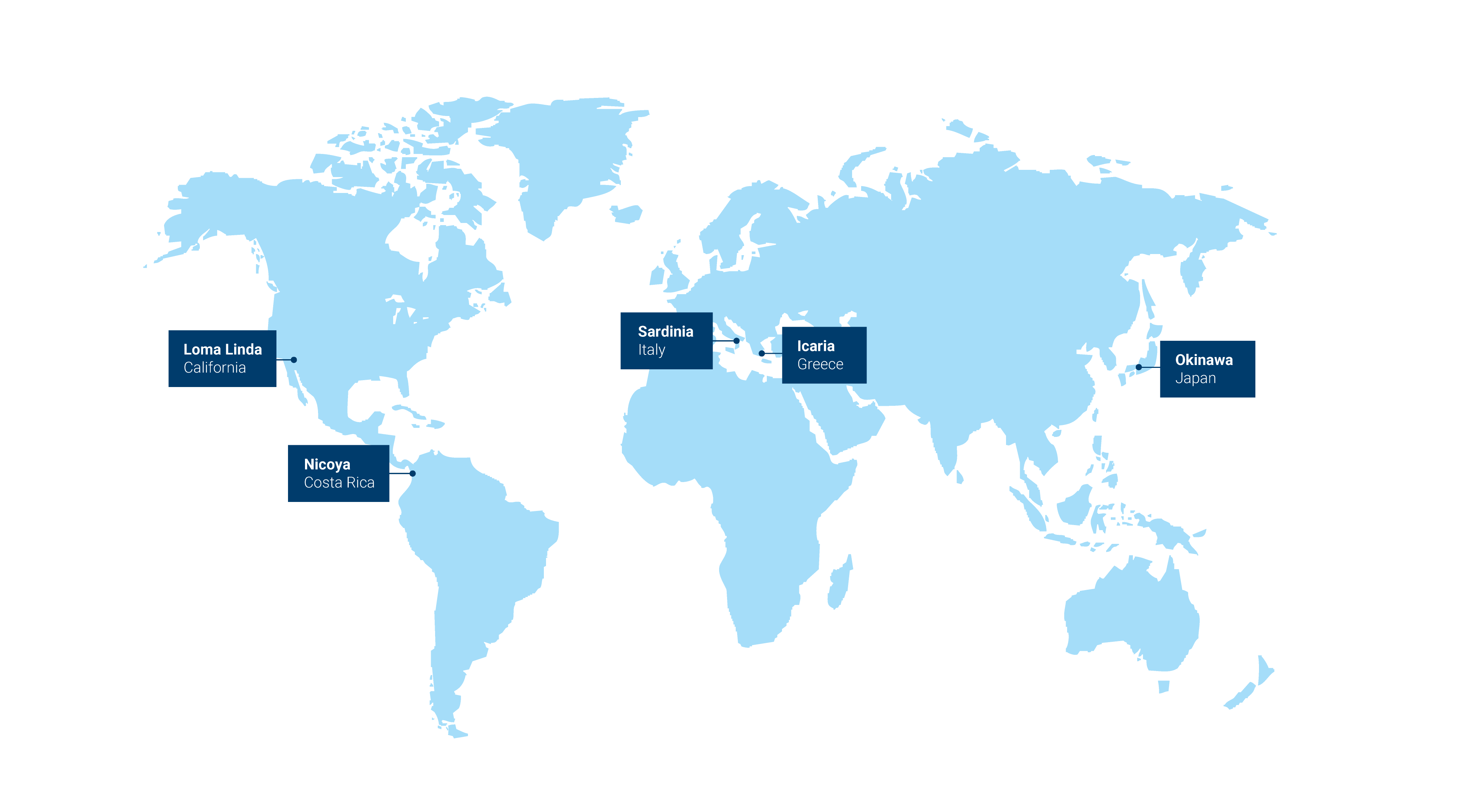
“The ‘Blue Zone’ conversation is mostly about individual diet, erasing Okinawan perspectives that have long framed food as ‘life medicine’—what they call nuchigusui—that is intrinsically connected to spiritual community and environmental relationships,” Christy said. “OMI sees these trends, as well as a rise in dependence on industrialized food products imported from Japan and the United States, as key elements of the dramatic change experienced by the islanders in living memory.”
Christy says that researching the island’s historical food sources and how its cuisine evolved could play an important role in preserving its people’s culture.
The Employing Humanities Initiative and the Building Belonging Program fund seven undergraduate student leaders to hold paid part-time roles with OMI to develop technical and transferable skills while gaining professional experience on this large-scale research project.
Exploring roots and practicing skills

Nixie Young (Merrill ’25, history)
For student Nixie Young (Merrill ’25, history), the trip was more than an academic experience. She was learning about her family history, too.
“I got involved in OMI as a history major, and I want to work in an archive or an exhibit. But I’m also mixed-race Okinawan on my father’s side of the family,” Young said. “My grandmother’s parents immigrated from Okinawa to Hawaii in 1907 and then later moved to California. But I never learned much about it because my grandmother passed away when I was really young.”
Student Aivan Bach (Oakes ’26, environmental science and anthropology) planned to play a role in media production for OMI, so practicing media skills during the trip was rewarding.
“And also sitting in on the oral histories, as well, which I hadn’t done before,” said Bach. “Just getting to listen to people talk about their experiences and seeing the whole interview process was really cool.”
Bach has also been learning some Japanese, and it felt good to understand parts of the interview the students did with a local master chef.
“I was a bit nervous, but I’m glad I did it,” Bach said. “And I felt like I was contributing to OMI and broadening my skill set, as well.”
Research, history, and culture
The OMI team did 10 days of research on Okinawa, in collaboration with colleagues at the University of the Ryukyus. Among their activities were:
- Participating in coral-reef regeneration and seaweed research work at the Onna Village Fisheries Cooperative and interviewing members about their experience with aquaculture fecundity, crisis, and renewal in the postwar period.
- Visiting a pig farmer’s house, a research forest, a farmer’s market, and a dry goods store serving clients throughout the South China Sea region.
- Interviewing and cooking with the acclaimed traditional Ryukyuan chef Tsukayama Keiko (Ryukyuan people are an ethnic group native to the Ryukyu Islands, which includes Okinawa Island).
- Exploring war memories with visits to sites including the Okinawa Prefectural Peace Memorial Museum.
- Learning about Okinawan heritage through castle ruins and music.
- Touring the Okinawa Institute of Science and Technology.

(Left) UCSC student Luke Devon and master chef Keiko-san sauté goya (bitter melon) as Serinah Tan from the Institute for Global Education at the University of the Ryukyus looks on; (middle) UCSC students Courtney Sugano, Nixie Young, Geneva Samuelson, Chanel Chavira, Aivan Bach, Nicholas Sciole, and James Leyton pose in front the University of the Ryukyus library after presenting about the Okinawa Memories Initiative to university faculty, students, and staff; (right) Walter Barnaby holds a sea cucumber during a coral reef restoration project presentation. (Photos by Jessica Guild)
Their research included investigations of the histories of staples such as sugar cane, sweet potatoes, bitter melon, and peppers, all of which link Okinawan food to regional and transregional circulations, from Indonesia, the Philippines, Taiwan, South China, Korea, Japan, and even the Andes.
Their work will result in an updated, collaborative, and interactive exhibit that will travel to key sites of the Okinawan diaspora, starting with Okinawa Association communities in California, Hawaii, and Washington.
They also plan to co-curate a fall show at UCSC’s Eloise Pickard Smith Gallery with chef Keiko.
This trip was additionally a pilot for establishing a relationship with University of the Ryukyus for future jointly funded annual visits to Okinawa. UC Santa Cruz now has a formal agreement with the University of the Ryukyus, and the campus will host its first Okinawan international student this fall.
The power of the humanistic approach
OMI is an example of a project in the humanities that inherently connects research, education, and community engagement, and in so doing reveals the power of humanistic approaches to some of the central challenges of our global society, said Pranav Anand, THI faculty director and professor of linguistics.
“Over its many years, it has built a remarkable collaborative network that shares knowledge, expertise, and access, all in the service of a deeper understanding of the kinds of complex, mutliperspectival connections that link us across the seemingly insurmountable distances of time, space, nationality, and culture,” he said. “In a period in which we seem to be so worried about the ability of people to talk across the boundaries of conquest, pain, and disaster, this initiative is an example of how humanistic commitment to people’s intrinsic humanity can enable dialog and community.”
Anand noted that the project was built slowly by connecting with communities first and building trust, and then progressing based on the needs and counsel of those communities. THI was with OMI every step of the way, helping the OMI leaders to dream a bit bigger each time, and working behind the scenes to help iron out complexities.
“I am quite proud that The Humanities Institute has been able to support OMI throughout this process, incubating it from an idea and an archive of photographs into the powerhouse it has become,” Anand said.” It really is one of THI’s crown jewels, an example of how THI’s three pillars of research excellence, student success, and community engagement are not separate initiatives, but all components of what humanistic work can achieve.”
Team bonding and deep connections
While research and enriching historical learning were main elements of the journey, another important aspect was deepening the students’ bonds with each other.

Aivan Bach (Oakes ’26, environmental science and anthropology)
“It was nice to get to hang out more and talk more with people that I don’t interact with too much,” said Bach. “There were three of us undergraduate students who knew a bit of Japanese, so also navigating in a country where you didn’t really know the main language and having to go to restaurants and order things—that definitely helped with team bonding, as well.”
Watching how the relationships developed between the UCSC students and the local University of Ryukyus students was a highlight of the trip for Guild.
“I know these connections will have ripple effects long past the 10 days the students spent in Okinawa, and I hope they all have developed some lifelong friendships,” she said. “These opportunities for friendship and learning together are critical as students of this generation navigate an ever-changing, and ever-smaller, global society.”
The work they did was meaningful, too.
“It felt really fulfilling,” Barnaby said. “The experiential learning part of it was great—like the cooking workshop. It was really eye-opening. It really felt like you were participating in this culture to some degree, which is a totally different experience from just learning from it from the outside looking in. And then I always really enjoy doing interviews, so that was one of the highlights of the trip.”
It’s an experience that not a lot of people get, said Young. She expects to return to the island, and to be able to be even more productive because of the strong relationships built with the people she met.
In the meantime, Young is still processing her feelings. On top of the learning, adventure, connections, and friendships the whole group experienced, she was able to trace some of her family’s history and even meet a distant relative. Her identity of being Uchinanchu—the term used by Okinawan immigrants and their descendants in Hawaii to identify themselves as an ethnic group—and Yonsei—fourth-generation Okinawan—made the journey even more profound.
“The second I got there,” Young said, “it was like, ‘Oh, I’m experiencing this on a whole different level.’”